
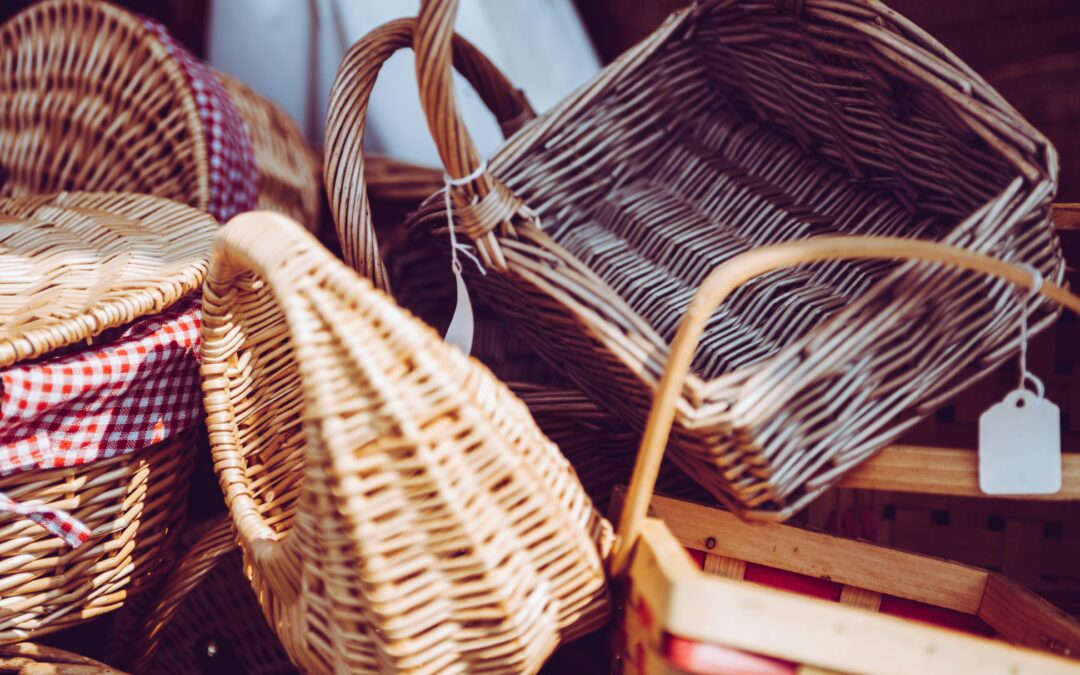
African American Basketry
When we talk about African American history, we often focus on music, foodways, spirituality, resistance movements, and language. But there’s another art form — quiet, durable, deeply symbolic — that has carried culture across continents and centuries:
These baskets aren’t just functional containers. They’re archives. They’re memory keepers. They’re the physical proof that even in the harshest conditions, people held onto their humanity, creativity, and identity.
Let’s take a journey through this incredible tradition — from African origins to Lowcountry innovation, cultural symbolism, modern artistry, and the challenges that keep this tradition fighting to survive.
🌍 Rooted in Africa: Knowledge Carried Across the Atlantic
Before basketry took on its uniquely American forms, its story began thousands of miles away on the coasts and savannas of West and Central Africa. Basket-making wasn’t just a hobby there; it was a skilled craft, an agricultural toolset, and a cultural language.
Enslaved Africans brought across the Atlantic carried very little with them — no luggage, no possessions, no tools. But what they did bring was embodied knowledge: the memory of how to weave, how to cultivate, how to build, and how to create.
Key African influences woven into early American baskets included:
- Coil techniques seen in regions like Senegal and Angola
- Rice fanning trays and other agricultural tools
- Bulrush, sweetgrass, and other natural materials already familiar in African craft traditions
- Geometric designs with spiritual and cosmological meaning
Imagine this: people in unimaginable circumstances, forced into a brutal new world, yet still quietly weaving the same patterns their ancestors used. Every coil, every stitch was a way of saying:
“I remember where I come from.”
This is the first miracle of African American basketry — the survival of knowledge that was never meant to survive the Middle Passage.
🌾 Innovation in the American South: Basketry as Survival and Skill
Once in the American South — especially the marshy coastal regions of South Carolina and Georgia — enslaved Africans were forced to work in rice cultivation. Plantation owners exploited their agricultural expertise, but it was the enslaved communities who adapted their basketry to this new terrain.
Thus began the evolution of what we now call sweetgrass baskets, also known historically as Gullah baskets or Gullah Geechee baskets.
Why Sweetgrass?
Sweetgrass grows in abundance in coastal marshes. It’s fragrant, flexible, and soft to the touch — yet it weaves into baskets that are incredibly durable. When combined with materials like palmetto, pine needles, and bullrush, sweetgrass creates a basket strong enough for agricultural work but beautiful enough to be cherished for generations.
Sweetgrass baskets were essential tools, used for:
- Rice processing, particularly the large winnowing trays called fanners
- Storing grains and food items
- Fishing and farming
- General household and domestic tasks
These baskets were perfectly adapted to the climate and workload of the Lowcountry — strong, breathable, and ideal for handling rice, which was a cornerstone of early colonial wealth.
Here’s the irony:
Enslaved people’s basketry helped build the early economic success of the American colonies, but the artistry, innovation, and cultural meaning behind the baskets belonged entirely to the weavers themselves. The craft wasn’t something plantation owners valued as “art” — but within the Black community, it remained a cherished, living connection to Africa.
✨ Cultural Significance: Baskets as Carriers of Identity
Under enslavement, almost everything was taken: names, languages, family structure, cultural practices. But basketry survived because it could be practiced quietly — passed from mother to daughter, shared in late-night hours, held in the privacy of memory.
It was more than craft. It was cultural identity woven into physical form.
Sweetgrass basketry became a vessel for:
- Cultural memory — a direct link to African origins
- Family continuity — skills taught within kinship lines
- Community cohesion — the shared language of design and symbolism
- Spiritual meaning — circles representing life cycles, resilience, and the everlasting nature of the soul
- Dignity and self-worth — creativity that no enslaver could steal
Some patterns and forms are still considered sacred in Gullah Geechee culture. They’re not for mass production. They’re not taught casually. They’re family inheritances — heritage patterns, protected and honored.
Even now, many weavers talk about the feeling that when they sit down with sweetgrass in hand, they’re connecting with generations back to Africa. It’s a spiritual act as much as an artistic one.
📌 From Hidden Art to Celebrated Legacy
After emancipation, basketry continued to be both an economic anchor and a cultural pillar. Black women in particular used basket sales to support their families, gaining economic independence in a world offering them very few opportunities.
Major 20th–21st century milestones transformed sweetgrass baskets from domestic craft to celebrated art:
- Highway 17 Markets — Sweetgrass basket stands along the Charleston corridor brought national attention and tourism
- Smithsonian exhibits — Recognized sweetgrass baskets as fine art, not folk craft
- Art galleries and academic scholarship — Highlighted the cultural and historical significance
- Mary Jackson — A world-renowned Gullah Geechee artist, winner of the National Heritage Fellowship, the highest honor for folk artists in the U.S.
Suddenly, the world began to see what Gullah families had always known:
These baskets aren’t just functional. They’re masterpieces.
Today, sweetgrass baskets appear in:
- Museum exhibitions across the country
- Contemporary art installations
- Cultural education and preservation programs
- University archives
- Family ceremonies, weddings, and gift traditions
The baskets are no longer hidden tools of plantation labor — they’re celebrated symbols of African American artistry and endurance.
🌱 Living Tradition, Modern Challenges
While sweetgrass basketry remains vibrant, it faces serious threats — some environmental, some economic, some cultural.
- Climate Change & Land Development
Coastal development has paved over much of the land where sweetgrass naturally grows. Rising sea levels, saltwater intrusion, and habitat loss mean that weavers sometimes have to travel far (or buy expensive cultivated grass) just to get materials.
- Mass-Produced Imitations
Cheap, factory-made imports mimic the look of sweetgrass baskets but lack the cultural meaning, quality, and authenticity. These products undercut weavers and confuse consumers who don’t know the difference.
- Cultural Appropriation & Commercial Pressure
As interest grows, some outsiders attempt to reproduce designs — even sacred ones — without understanding the history or community rules. Weavers often feel pressure to commercialize traditions that were never meant for mass consumption.
- Generational Shifts
Younger Gullah Geechee people often move to cities or pursue careers outside the region, making it harder to maintain the intergenerational passing of knowledge.
The survival of this art form isn’t just an artistic issue — it’s a cultural preservation movement and an environmental justice issue.
❤️ What Sweetgrass Baskets Represent Today
Despite the challenges, sweetgrass basketry is thriving — and its meaning is more powerful than ever.
African American basketry represents:
- Centuries of expertise passed down through hands and memory
- Resilience in the face of violence and erasure
- A refusal to let culture disappear
- Art that speaks across generations
- A living link between Africa and the American South
When you pick up a sweetgrass basket, you’re not just holding woven plant fibers.
You’re holding:
A fingerprint of ancestry.
A memory you can touch.
A story that kept breathing when people tried to silence it.
Sweetgrass baskets remind us that art can be resistance, creativity can be survival, and culture — even when threatened — can find ways to endure.
🌾 Conclusion: The Story Lives On
The story of African American basketry is one of the most beautiful examples of continuity in the African diaspora. It starts with African origins, expands in the American South through necessity and innovation, carries spiritual meaning, and evolves today as a celebrated art form.
More importantly, it embodies the ability of a people to hold onto identity through craft — quietly, steadfastly, and with extraordinary beauty.
As long as there are hands to gather sweetgrass, minds to remember the patterns, and hearts dedicated to preserving this heritage, the tradition will continue to flourish.
The story is still being woven.
Order your basket today!